

Anthropic used Mythos to find 79 kernel bugs and sent the raw data to Greg Kroah-Hartman. In his Kernel Recipes 2026 talk, Greg shared the verification results: only 10 turned out to be real fixes.
In the same talk, he noted that the gap between a fix and an exploit has shifted from 63 days after a patch to minus 7 days. Mandiant’s M-Trends 2026, based on 2025 incident investigations, also estimates that the average exploit appears 7 days before the patch is released.
Maintainers were not impressed by the batch. Greg went through all 79 reports one by one: 14 were not bugs at all, 3 were completely fabricated, and another 11 had already been publicly fixed before the reports were sent.
He listed 20 items requiring changes, covering scenarios such as root mounting malicious filesystem images, SCTP in telecom networks, MMU-less systems, and local malicious users accessing GPUs. Those numbers do not add up to 79, so you cannot calculate an exact false-positive rate—prompting Greg to quip, “LLMs cannot count.”
Model-generated patches were no more reliable. This summer, Greg had six graduate students review a batch of model-generated patches; among the ones that looked right, half were wrong.
Some patches did not apply at all, some addressed nonexistent issues, and one even replaced mutex_unlock with mutex_destroy, removing the original unlock and introducing a new bug. Greg also found that stripping out the changelog explaining the intent and looking only at the code led to better review outcomes.
Reviewing these reports and patches is exhausting for maintainers, yet downstream users cannot afford to relax. Once a vulnerability or patch becomes public, models no longer need to hunt for bugs from scratch—they can take public disclosures and stitch together an exploit chain.
Anthropic’s report published in late September includes a concrete benchmark. They evaluated Zhipu’s open-weight model GLM-5.3 alongside their own Mythos; one task involved building an exploit chain from disclosed vulnerabilities against an offline target set up by researchers in an isolated sandbox.
Researchers handed GLM-5.3-Flash documentation for the newly disclosed Chrome CVE-2026-11645 and another known bug, with almost no extra prompting. After 8 hours of model runtime and 20 minutes of human intervention, it produced a reliable exploit chain bypassing Pointer Authentication (PAC) on ARM64. Based on Zhipu’s API pricing, the estimated model cost for that single run was $20.40, excluding human time.
I have not reproduced this single-party evaluation, and $20.40 is not an average attack cost, but it shows where the risk sits. The experiment used post-patch public materials—as long as older versions remain running in production, those public disclosures serve as ready-made leads.
Even if a single model is, as Greg put it, just “really dumb bots,” they will keep trying and string together several seemingly harmless issues into an exploit chain. That is why kernel users cannot cherry-pick only high-severity CVEs: every stable fix needs to be tracked, and release notes for non-kernel dependencies must be read separately. As he put it bluntly in the talk, “people are not rolling out fixes to their systems.”
A common reason security patches stall before reaching production is that they get bundled with feature or major-version upgrades. Major upgrades have a wide blast radius and high regression risk, so patches stuck inside them end up waiting in the same queue.
The first step to shrinking the rollout window is separating security patches from major upgrades. Configure Dependabot or Renovate to open dedicated security PRs that touch only the dependency versions needed for the fix, clearly stating the blast radius and required tests, while keeping formatting, refactors, and unrelated upgrades in separate PRs. When you need to roll back, you only revert a single dependency bump instead of pulling back new features from a major release.
This fast lane is strictly for upstream-released fixes; unverified, ad-hoc patches generated by models do not belong here. For patch-level updates with test coverage and fast rollback, merge the same day CI passes and schedule a separate deployment, leaving modules with thin test coverage for manual inspection. Minor updates occasionally cause regressions, but the cost of rolling back once is far smaller than leaving a known vulnerability exposed until next quarter.
Updating a dependency manifest does not necessarily update system packages inside a container. Per the Docker build best practices, an image is a snapshot of the moment it was built: if a Dockerfile specifies python:3.12 and upstream updates that tag, your already-built application image stays unchanged. Add --pull to scheduled rebuilds so Docker checks for and pulls the latest base image before building and running tests. Once a week is a reasonable starting cadence depending on exposure, with ad-hoc rebuilds for known high-severity fixes rather than waiting for the scheduled job.
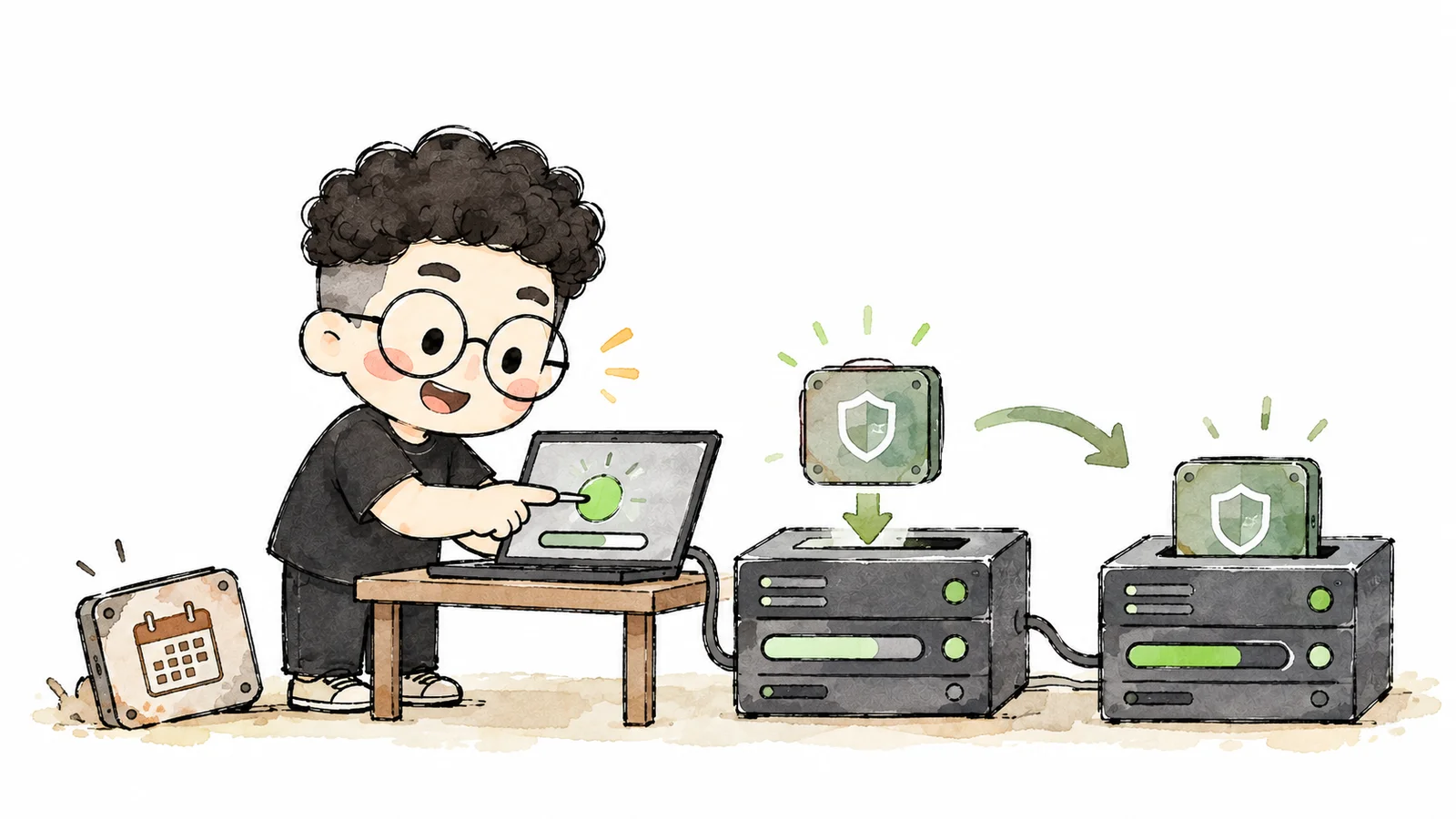
A security update is not done when the PR is merged—record the new image digest in the release log and verify running production instances against it after deployment. As long as any instance is still running on the old image, keep the update marked as “pending deployment”; if a rollback happens, log the reverted version and keep the pending status open so the team does not assume production is already patched.
Log both the upstream fix release date and the production rollout date in the same release record, then inspect the longest gap first. You will quickly see whether the delay is stuck at merge, build, or the release window.
文中链接
- talkhttps://www.youtube.com/watch?v=NnV_cWeoo5Q
- M-Trends 2026https://cloud.google.com/blog/topics/threat-intelligence/m-trends-2026
- reporthttps://www.anthropic.com/research/glm-5-3-and-the-spread-of-advanced-cyber-capabilities
- Docker build best practiceshttps://docs.docker.com/build/building/best-practices/#rebuild-your-images-often
Copyright
- Author
- XingKaiXin
- Title
- Only 10 of 79 AI Kernel Bug Reports Stuck, While Exploits Arrive 7 Days Before Patches
- Published
- 2026年11月20日
Licensed under CC BY-NC-ND 4.0 DEED.