

Agentic Era Engineer’s Survival Guide · Tools
People often ask me: “Which is better, Claude Code or Cursor?”
My usual answer is that the question itself misses the point.
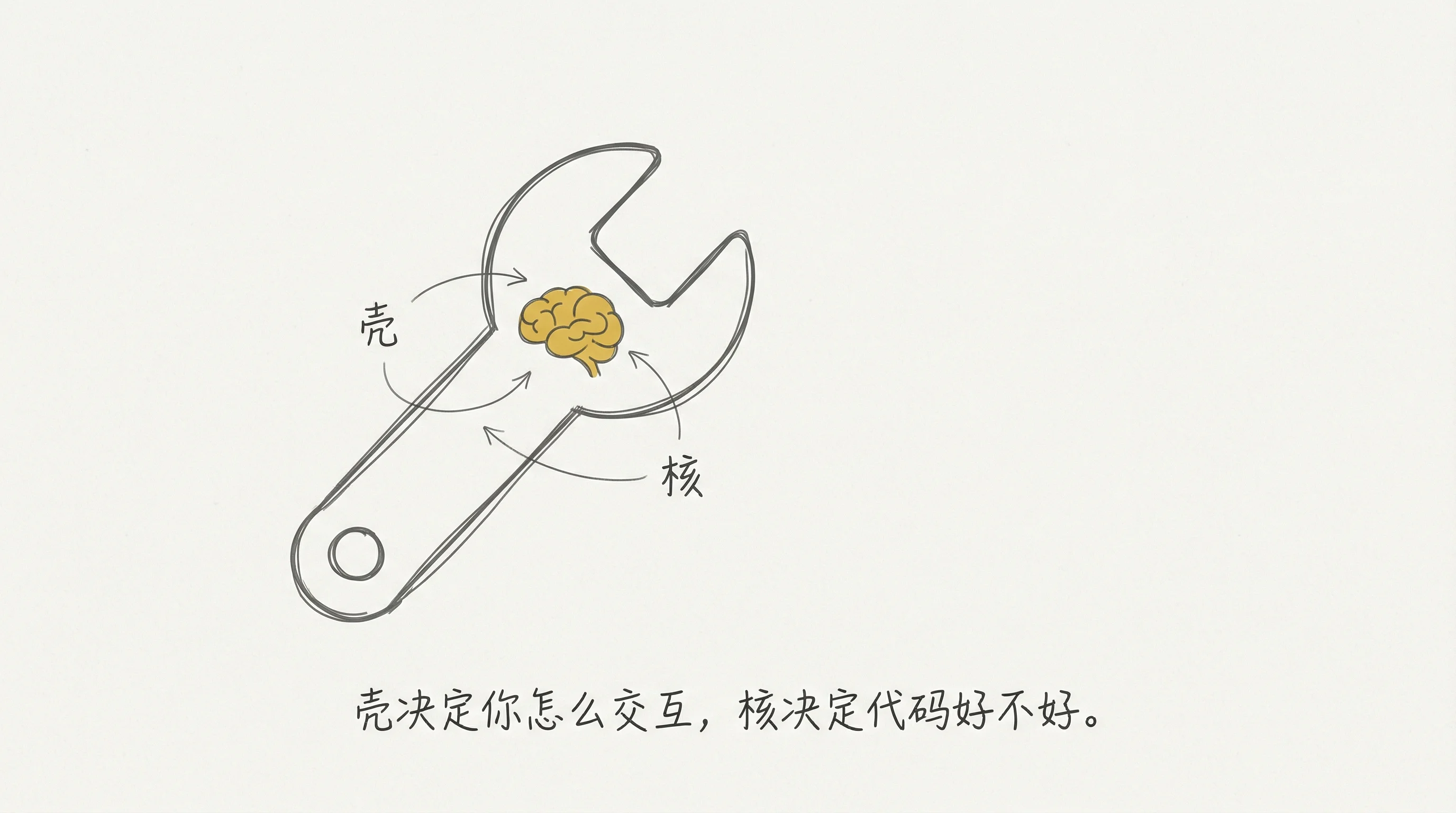
It’s like driving a car: steering feel matters, but the engine decides performance. Cursor, Claude Code, Codex, and Windsurf are interfaces—the shell. The LLMs behind them—Claude, GPT, Gemini—are the core. The shell shapes how you interact with AI, but whether the code is solid, whether requirements are understood accurately, and whether debugging lands on the first try—all of that comes down to the core.
Getting this straight matters ten times more than picking the “right” tool.
Cursor’s Pricing Strategy
If you’re still debating whether the shell or the core matters more, just look at Cursor’s pricing.
Cursor lets you swap the underlying model—you can run its in-house model, or switch to Claude or GPT. If the shell were strong enough on its own, why let users swap the core?
The pricing tells the same story: Auto mode is the cheapest, where Cursor routes requests for you—lightweight models for simple tasks, stronger models for hard ones. Manually pinning the latest Claude or GPT models costs noticeably more.
Translated: our own core isn’t strong enough yet, so we add smart routing at the shell layer. If you want a truly strong core, you pay extra.
At heart, Cursor wants to own a core, even though the shell is its main business. It knows a pure shell has a shallow moat, so it pushes Auto routing and in-house models to raise the shell’s value.
Claude Code and Codex are different—the shell and the core come from the same house. Model labs understand their own models best, tune them most tightly, and achieve a level of integration third parties struggle to match.
Cursor’s shell is genuinely great, with smooth IDE integration. But as shell-and-core-integrated products mature, pure shells will have a harder time competing.
The core determines the shell.
Building Fin-Agent in Practice
Theory gets old fast, so let me share the walls I actually hit.
In early November, I started building Fin-Agent, a financial Q&A tool, using the Claude Agent SDK. The SDK had just been renamed, which meant plenty of migration work. It was brand new with incomplete docs, so hitting snags was inevitable.
At first, I wrote everything with Claude Code. I burned through my quota quickly and hit the weekly limit. Progress stalled, which was frustrating.
So I moved the frontend work over to Codex. Codex launched in May, and I started my subscription in October—the plan comes with generous usage limits. Handing off frontend components and data processing—tasks that didn’t touch the Claude Agent SDK—to Codex + GPT-5-Codex was effortless.
But the moment I went back to the agent’s tool-calling logic and conversation flow orchestration—code that talked directly to the Claude Agent SDK—Codex got lost. It kept dropping key parameters or calling deprecated APIs. The SDK had only been out for a month and was changing fast (I hit several breaking changes upgrading from 0.2.x to 0.3.x), so Codex clearly hadn’t caught up.
That led to my current split:
- Backend Claude Agent SDK work → Claude Code + Claude 4.5 Sonnet
- Frontend and general logic → Codex + GPT-5-Codex
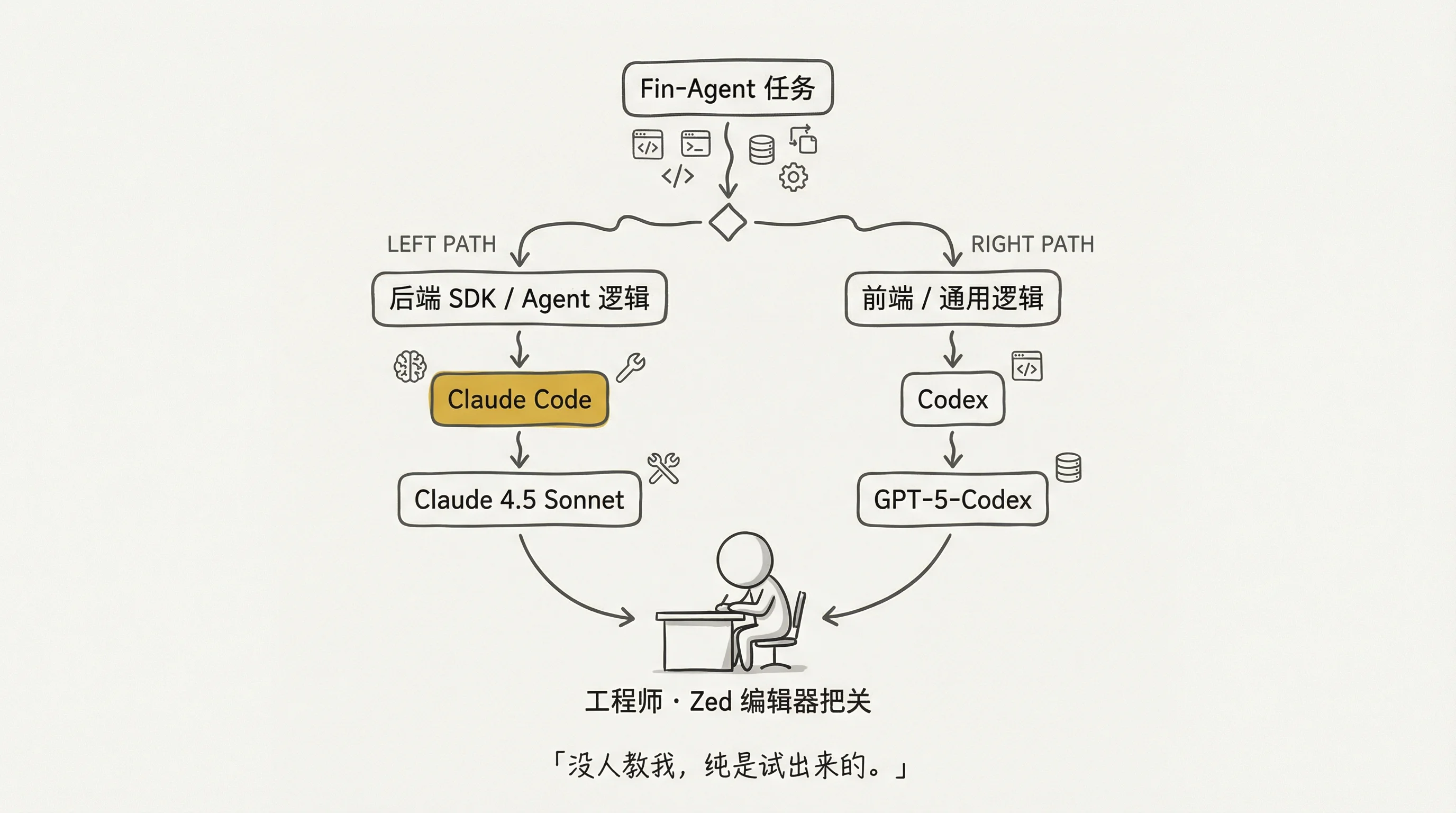
Nobody taught me this setup; I found it through trial and error.
Oh, and whichever one I’m using, I keep Zed open to watch every change. AI-generated code isn’t always right—a human still has to hold the line.
How to Choose: My Decision Framework
After tinkering with this setup for a while, I’ve boiled it down to three rules:
First, look at ecosystem lock-in. Which vendor’s ecosystem is your task tied to? If you’re using the Claude Agent SDK, Claude Code with Claude models fits best—it knows its own APIs inside out. If you’re deep into OpenAI’s Function Calling, Codex with GPT models feels more natural.
For general-purpose work—writing React components, transforming data—the specific tool matters much less.
Second, stay flexible. Don’t ask “which model is the strongest”—there’s no fixed answer. Claude excels at long-context understanding, while GPT-4o can be sharper in certain coding scenarios. When one model gets stuck, try another. Often the problem unlocks, not because the second model is universally stronger, but because it brings a different angle.
Third, cost. Codex gives you plenty of headroom; Claude Code’s quota is tight. For tasks without a clear preference, I run them through Codex and save Claude’s quota for work that genuinely needs deep reasoning.
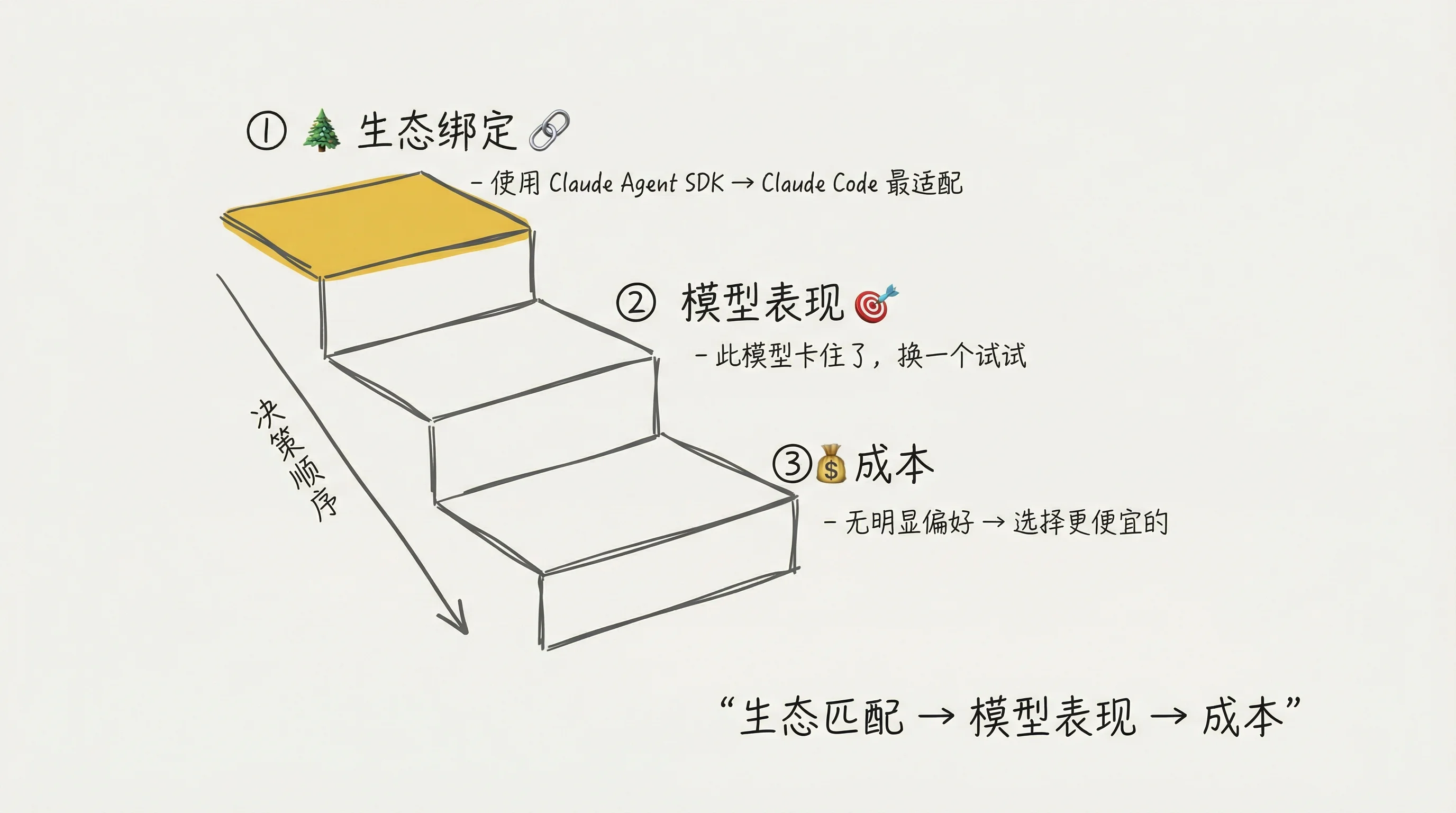
Decision order: ecosystem fit → model performance → cost.
Your Real Edge Is Orchestration
Back to the opening question: “Which is better, Claude Code or Cursor?”
That question doesn’t really matter. What matters is:
Can you look at the task in front of you and quickly pick the right model combination?
Tools iterate fast. Today’s Cursor could look completely different in six months; today’s Claude Code might update tomorrow. Models evolve too, with new benchmarks every few weeks. Tying your workflow to a single tool is a dead end in a fast-moving field.
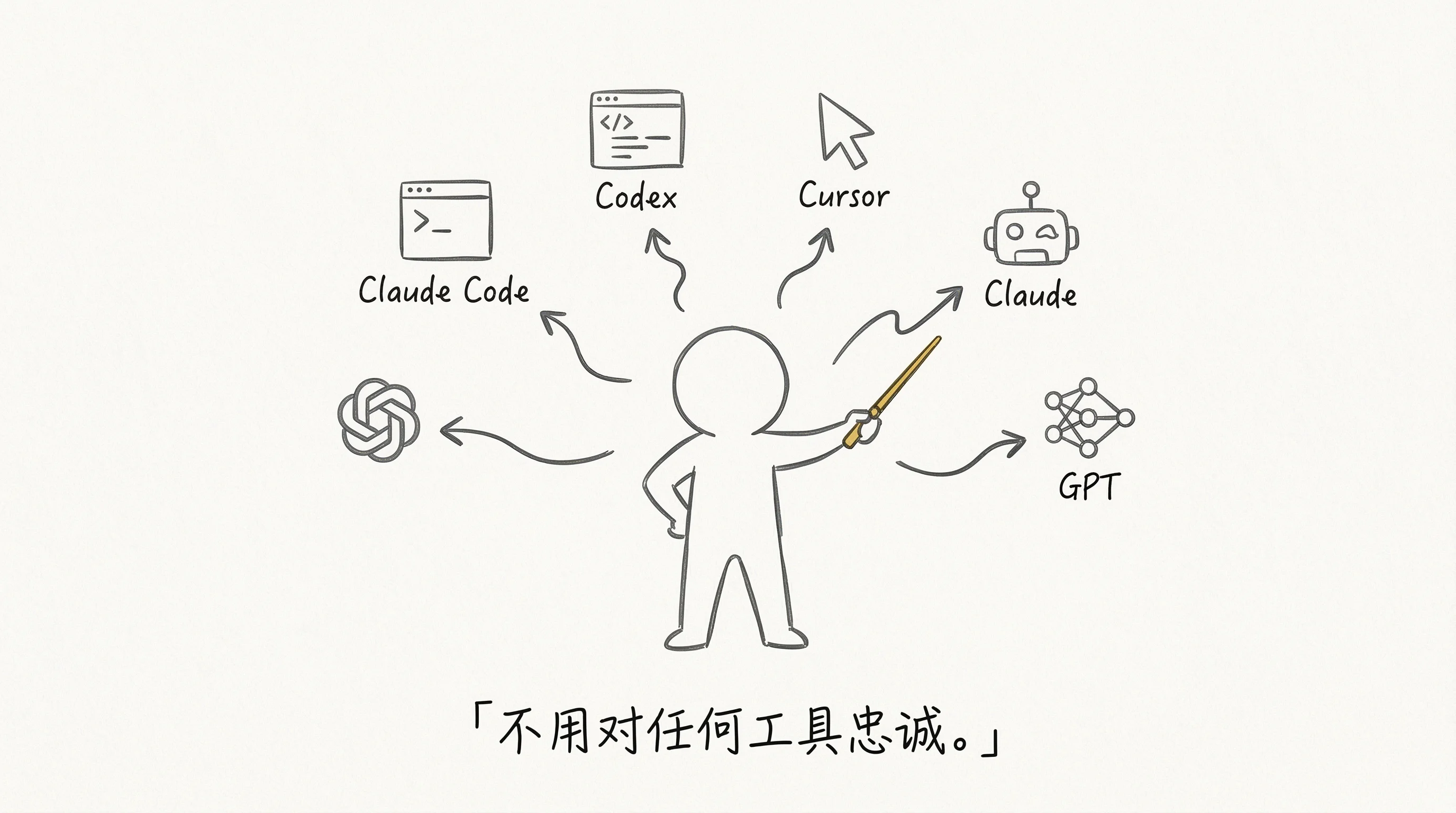
The smarter move is to train yourself as an orchestrator.
Learn each model’s strengths and blind spots, know which task fits which core, and switch between shells without hesitation. You don’t owe loyalty to any tool—just stay sharp about the problem.
The new posture for engineers in the agentic era isn’t “I’m a Cursor user” or “I’m a Claude Code user”—it’s “I know how to orchestrate models.”
Tools are the shell, models are the core, and an engineer’s real edge is orchestration.
Copyright
- Author
- XingKaiXin
- Title
- Coding with Both Claude Code and Codex: Tools Are the Shell, Models Are the Core
- Published
- 2026年4月2日
Licensed under CC BY-NC-ND 4.0 DEED.