

I have a command-line tool for managing agent session logs. I use it every day to search past sessions, export transcripts, and automatically compile a daily work log every evening.
I wrote it in Python about a year ago. Over that year, I kept iterating on it: adding support for more agents and various harness conventions, updating adapters whenever their interfaces changed, filling in small features I needed, and knocking out local performance optimizations along the way. According to tokei, the core Python codebase alone has over 180 files and more than 45,000 lines of code. Aside from being built on Python, it has a full suite of automated tests and runs smoothly in my daily workflow.
Cutting that rewrite branch started purely as an experiment out of curiosity.
I wanted to see what would happen if someone who knew nothing about Rust handed a year-old, 45,000-line Python codebase and its entire test suite to an agent, and asked it to port the whole thing.
My knowledge of Rust stopped at having heard terms like ownership and lifetimes. I couldn’t write a few decent lines of it, let alone guide its project architecture. Before starting, I simply ran a set of benchmarks on the Python version—recording throughput, memory usage, and output—to serve as a baseline.
A few hours later, the agent delivered on that experimental branch.
cargo test passed every single ported test case. On the benchmarks, thanks to the natural advantages of a compiled language, the numbers were a blowout: command startup dropped from over 140 milliseconds to 5 milliseconds, resident memory fell from nearly 40 MB to 3.5 MB, and listing or exporting sessions became several times—or even over ten times—faster. Functionally, it replicated 100% of the original logic and turned in an impeccable scorecard.
Yet as I stared at those numbers in the terminal, I felt an uneasy knot in my stomach.
When I opened the .rs source files, the screen was packed with pattern matching, generic constraints, and lifetime annotations. I could barely review a single line. I didn’t even bother reading through how the code was organized internally. By the standards of my ten-plus years in software engineering—more than a decade of habits—merging code into main when you neither understand it nor have any grip on its architecture is gross negligence.
Yet it ran, and its behavior was dead-on.
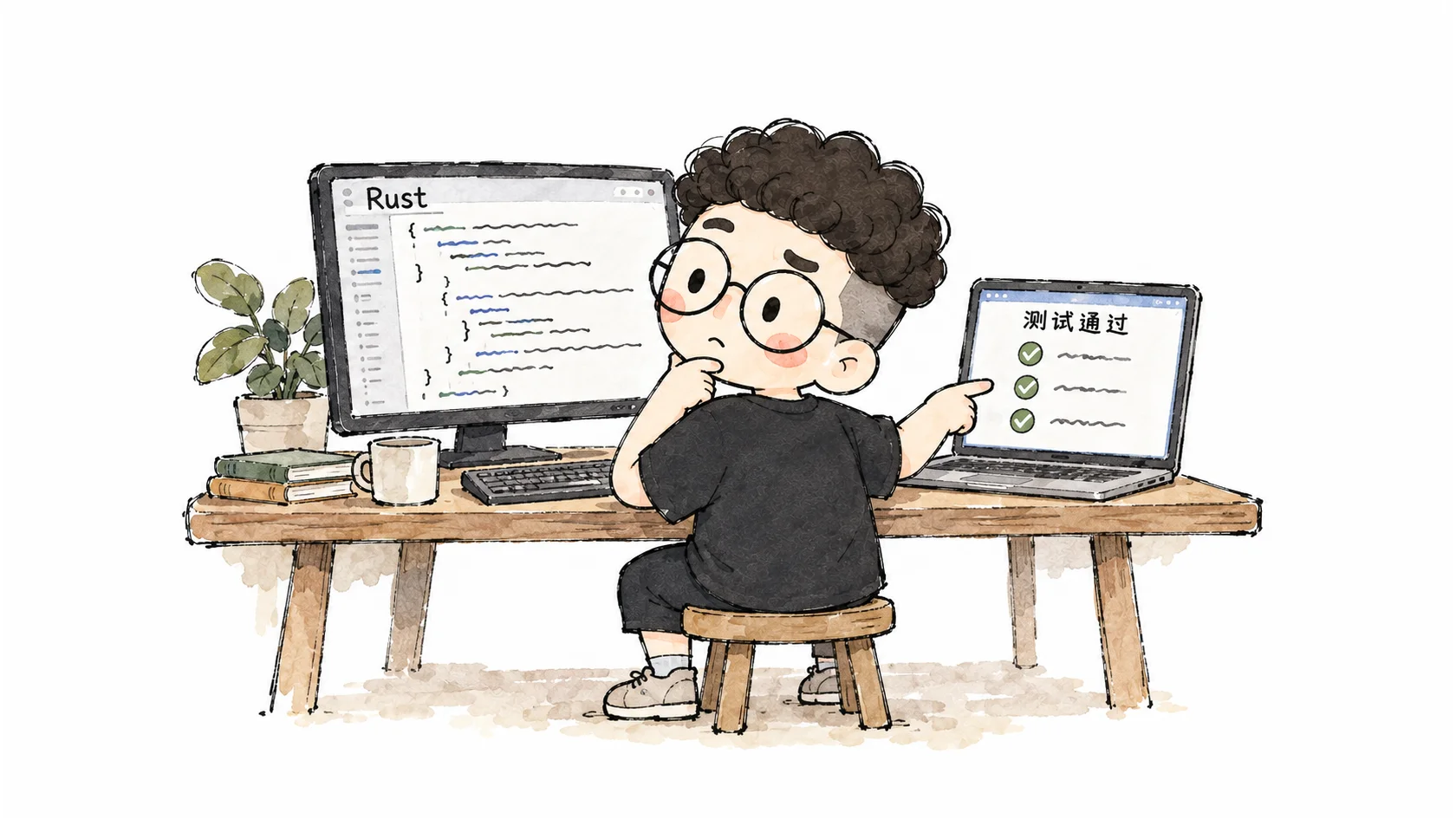
This unease is becoming increasingly common among developers. If I can’t even read the code, and I didn’t even design the architecture, how am I supposed to maintain it in the future? Can black boxes generated by machines really count as reliable software?
In the broader open-source world, this conflict has already played out in public.
Earlier, when large, production-grade core projects like Bun attempted or introduced Rust rewrites, it sparked massive community storms. By comparison, my CLI tool is just a personal project—nowhere near that scale or production risk. What is telling, though, is the direction the public backlash took around those rewrites.
The discussion quickly spilled past pure technical feasibility into style wars between language camps, fierce pushback against AI involvement, and even pretty aggressive personal attacks.
At the time, watching from the sidelines, I thought the arguments were a bit overheated. It wasn’t until I faced this Rust branch, completely rewritten by an agent, that I felt the nerve reflex behind that emotion firsthand:
It isn’t just dogmatism about a particular language. It’s an instinctive defense mechanism triggered when programmers steeped in traditional software engineering watch the craft they believe in get overturned overnight.
For anyone who has written code for over a decade, the first discomfort is losing physical control over syntax.
For years, we agonized over “taste” in code: choosing precise variable names, extracting duplicated logic into shared functions, splitting modules strictly by responsibility. Those rules had a very real physical basis: code used to be written, read, and maintained by humans. If you wrote the same logic in two places, a human engineer could easily forget to update one of them later and cause a production outage. Readability, deduplication, and elegant abstractions were, at their core, error-prevention scaffolding invented by human engineers to compensate for limited brainpower and memory.
But when the maintainer of the code becomes a machine, the weight of that scaffolding changes completely.
To a model, whether logic appears twice or twenty times is just a few extra tokens in the context window. As long as a test suite backs it up, its success rate at updating every duplicate in sync is far higher than a tired human brain’s. Code aesthetics built around “looking comfortable to the human eye” have to be revalued in this new environment.
This isn’t the first time a craft has gone through this kind of revaluation.
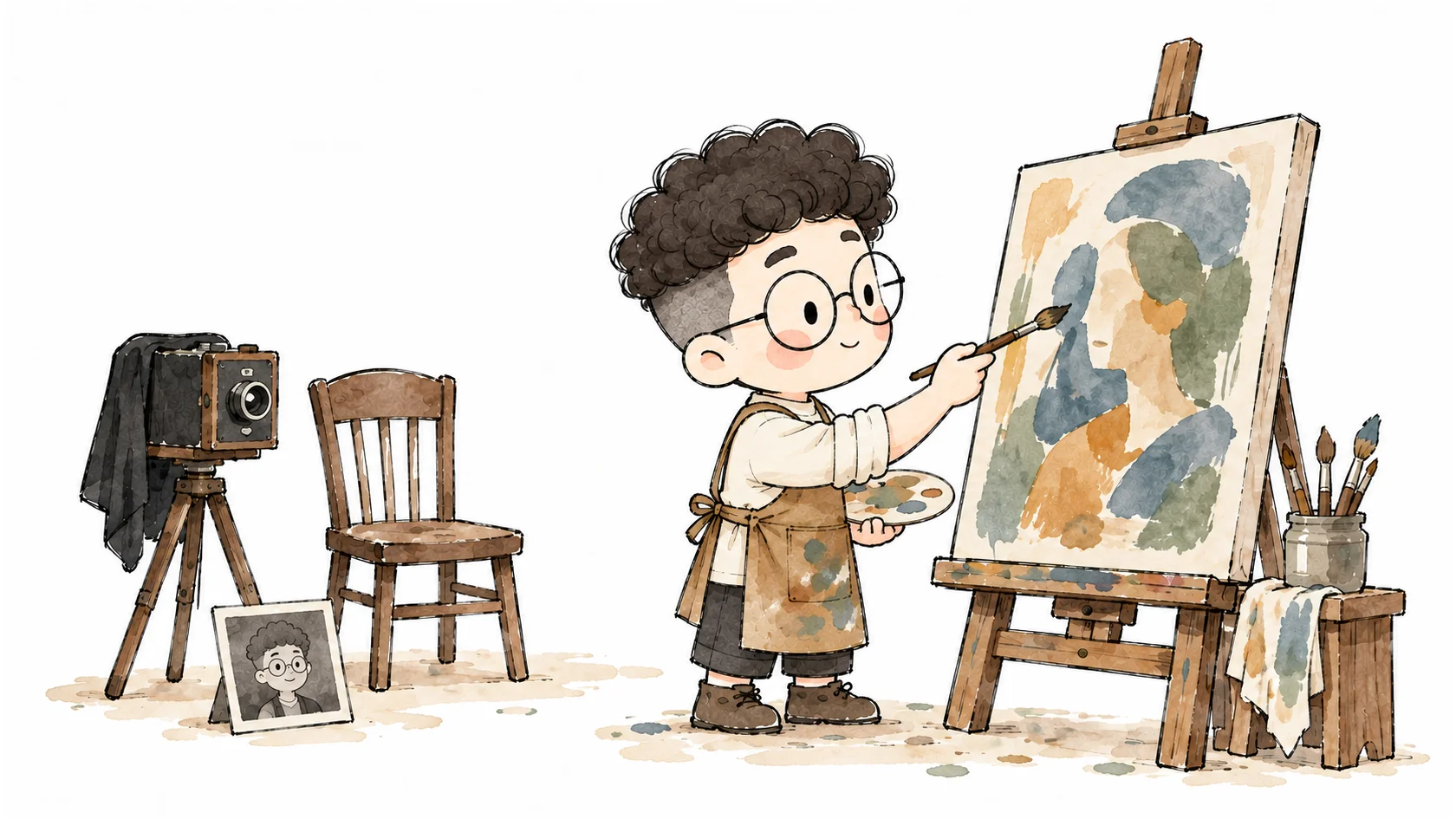
In the 18th and 19th centuries, if you wanted a portrait of yourself, you hired a top painter and spent months sitting for it. A painter’s most valuable skill was rendering a face in lifelike detail with fine brushstrokes—“painting accurately” was the highest technical moat of the craft. When photography first appeared, many painters reacted with anger and disdain. Baudelaire publicly condemned photography as unimaginative mechanical reproduction, unworthy of being called art. Then in 1900, Kodak released the $1 Brownie camera, and anyone could press a shutter and get a clear photo.
The market value of “painting accurately” collapsed overnight.
Yet painters didn’t go extinct. Once they lost their monopoly on realistic representation, artists were forced to stop competing with the lens and turned instead to composition, color, and subjective expression. The explosion of Impressionism, Cubism, and abstract art happened precisely in the decades after photography became widespread.
Hand-written code today is in a spot very close to “painting accurately” back then. It used to be a programmer’s most important moat, and now machines have turned it into a cheap, fast mechanical output.
Beneath the anxiety of a devalued craft lies a deeper fear—livelihood: if machines can write code even in languages I don’t know, why do we need so many people building software anymore?
This panic repeats itself in every wave of technological change.
In the 1970s, automated teller machines (ATMs) began rolling out across major U.S. banks. The prevailing consensus was that the bank teller job would soon vanish completely. The logic sounded airtight: if machines can dispense and accept cash anytime, anywhere, why would banks pay people to sit behind a counter?
Historical data told the exact opposite story.
Economist James Bessen dug through the archives from that era: in 1985, there were roughly 60,000 ATMs across the U.S. and 485,000 bank tellers; by 2002, the number of ATMs had grown to 352,000, and the number of tellers hadn’t shrunk—it had risen to 527,000.
The core reason was lower per-branch cost. Opening a branch used to require 21 tellers; with ATMs, it only took 13 to run. Lower costs pushed banks to aggressively open new branches across city neighborhoods. As total branch count surged, overall demand for tellers went up instead of down. And the teller’s job shifted: machines handled the mechanical cash counting, while tellers moved on to more complex consumer loans, credit cards, and financial advice.
The 19th-century British economist William Stanley Jevons observed something similar with coal: when steam engines became much more efficient at burning coal, Britain’s total coal consumption didn’t drop—it multiplied. When something gets cheaper, people find more places to use it.
The exact same thing is happening in software.
Sitting at the bottom of every team’s backlog is a pile of “worth doing, not worth the cost” requests: adding granular audit logs to an internal admin panel, rewriting a bloated web view into a snappy native desktop app, writing a custom automation script for a handful of specific users. Those requests never got scheduled simply because engineering hours were too expensive. Once you ran the ROI math, the only choice was to let the system limp along.
When the marginal cost of writing code drops to dimes or pennies, that pent-up demand floods out.
A small team maintaining native clients across multiple platforms, or building a bespoke tool for a group of a few dozen people—things that never penciled out before—are all suddenly viable. Software supply won’t shrink; it’s about to surge. The people behind it won’t need to type every line by hand, but they will have to decide what to build, how far to take it, and how to prove it works.
Beyond that sits an even heavier worry: what if code I can’t read hides subtle deadlocks or security vulnerabilities? What if an agent runs a command unsupervised and wipes production data?
Those risks are real, but how we respond to potential destructiveness decides where the technology goes.
In October 1945, Oppenheimer met Truman at the White House and said he felt he had blood on his hands. Truman was deeply put off afterward and said he never wanted to see the man in his office again.
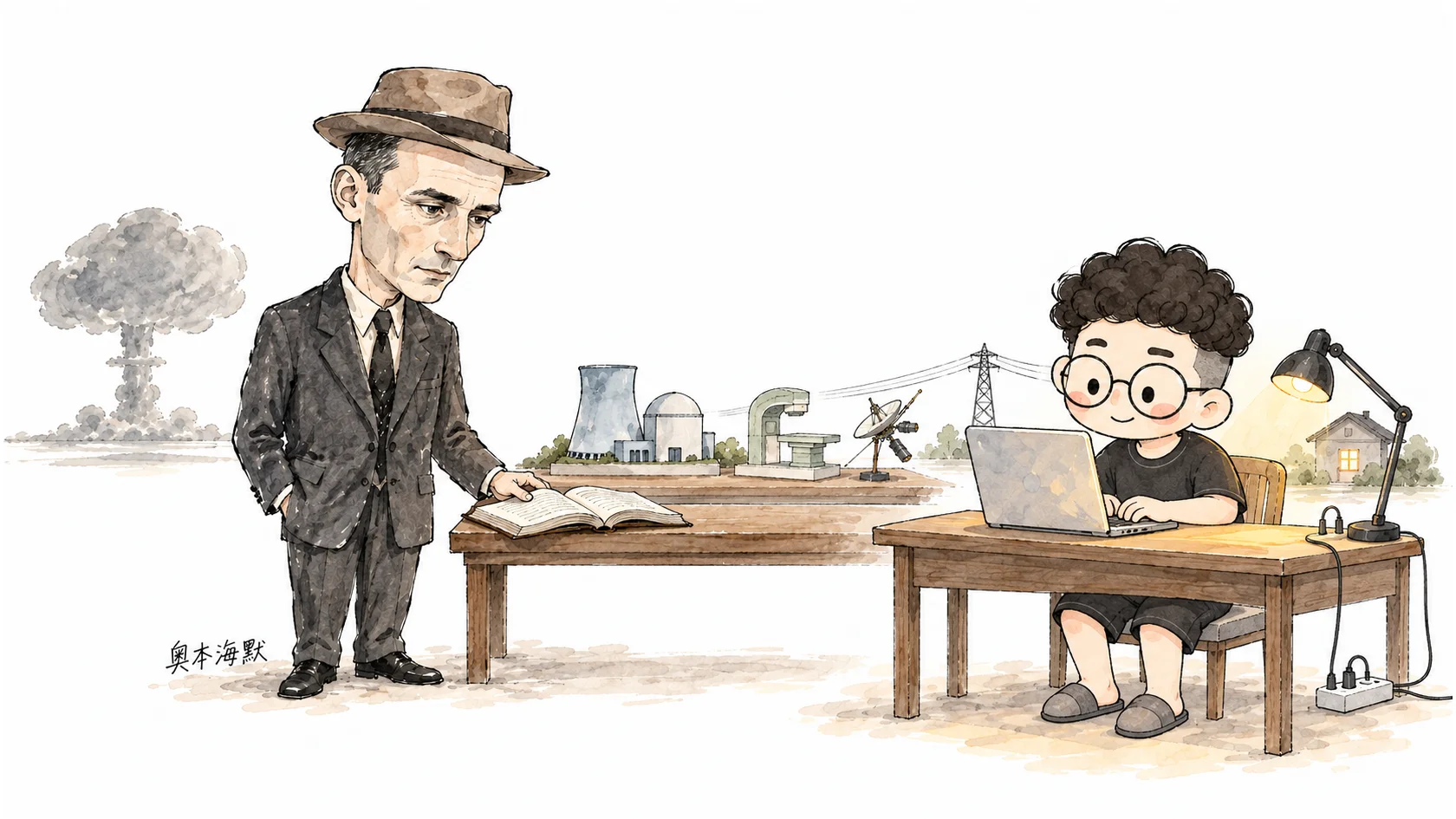
The atomic bomb caused immense devastation. Yet if humanity had locked away nuclear physics forever because fission could destroy, the world that followed would look completely different. Over the next eighty years, nuclear weapons were never used in war again. The same underlying physics gave us hundreds of nuclear power plants around the world, medical isotopes for treating cancer, and nuclear batteries that kept Voyager 1 and Voyager 2 traveling through interstellar space for nearly half a century—still sending deep-space data back to Earth today.
Had we stopped moving forward just because we could foresee the worst-case outcome, we would have forfeited clean energy and deep-space exploration altogether.
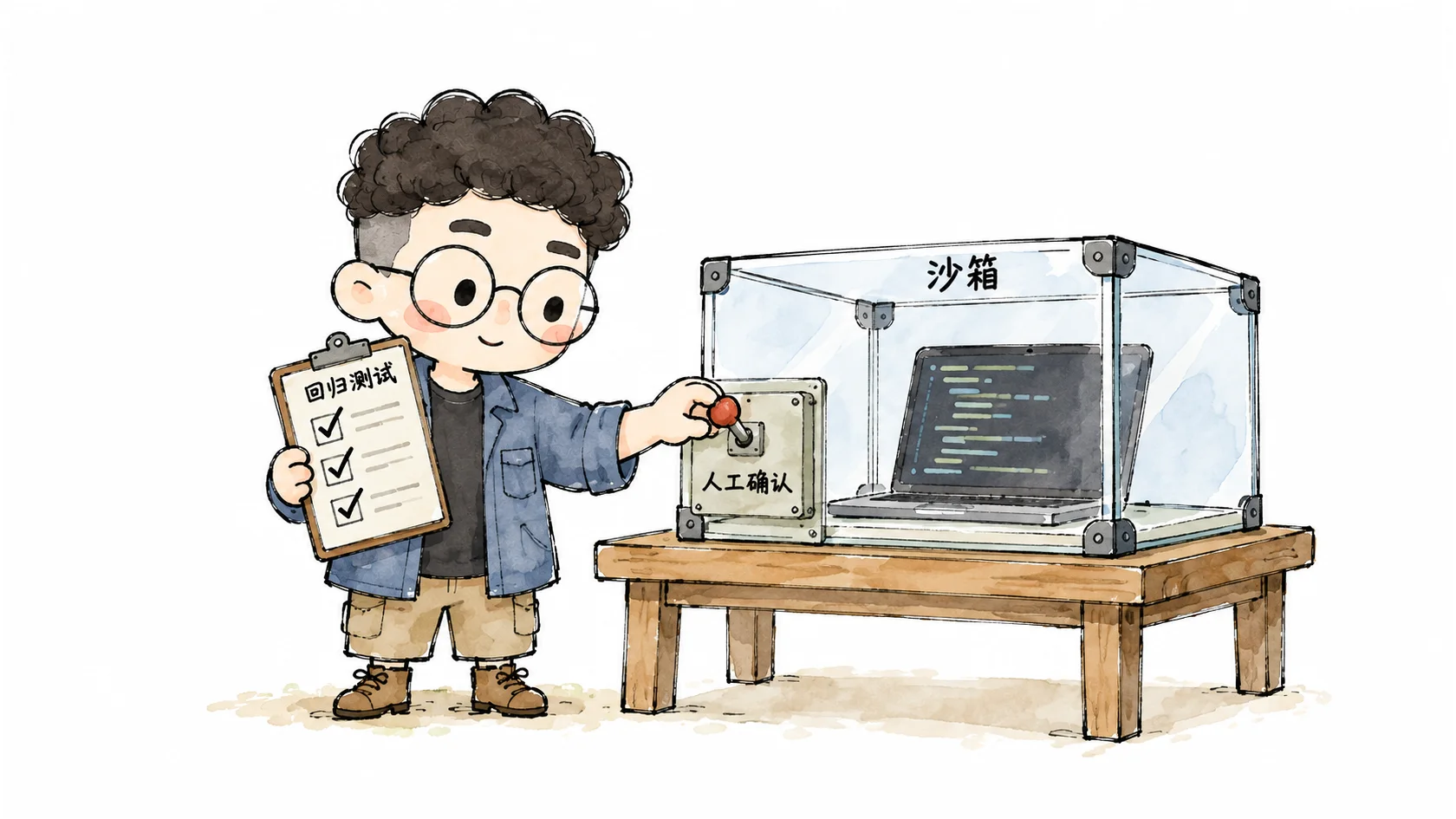
The right posture toward agent-written code is the same. It will hallucinate, and it can accidentally delete files or introduce vulnerabilities. The answer isn’t swearing it off out of fear; it’s constraining it with engineering boundaries: run it inside a sandbox, default to read-only permissions, require explicit human confirmation for destructive operations, and gate every change behind a full regression test suite.
Drawing boundaries and building safety nets is what engineers have always been best at.
Looking back at every major tool shift, almost no one accurately predicted how the future would unfold. The job-loss prophecies around ATMs fell flat, and Oppenheimer’s bleak outlook on the postwar world missed the mark too.
When the road ahead is foggy, the costs of pessimism and optimism are asymmetric.
If you choose pessimism—clinging to the old craft and refusing to use these tools—then once the paradigm shift finishes, you’ll have lost the crucial years needed to build engineering intuition during the transition. If you choose optimism and use them early to ship software, even if black-box code causes problems later, you’ll be among the first to know where the boundaries are and the first to know how to fix them with engineering discipline.
After that Rust tool experiment, I set a clear rule for my own workflow: as long as test coverage is thorough, benchmarks clearly win, and system permissions are locked inside a sandbox, I can deploy it to my machine with peace of mind—even if I can’t read a single Rust syntax detail in the source.
Once we stop writing code by hand, a programmer’s job is no longer catering to syntax. It is deciding what to build, and proving with rigorous engineering that it was built right.
Copyright
- Author
- XingKaiXin
- Title
- After We Stop Writing Code by Hand, Programmers Have More Software to Build
- Published
- 2026年9月28日
Licensed under CC BY-NC-ND 4.0 DEED.